Kenya secures duty-free access for 98% of exports to China in strategic trade deal
Kenya and China have agreed to a preliminary framework that will allow around 98 % of Kenyan exports to enter the Chinese market without import tariffs, a landmark move aimed at narrowing trade imbalances, strengthening economic ties, and expanding export opportunities for Kenyan producers.
By Sarah Johnson • 1/16/2026
Kenya has achieved a significant breakthrough in its trade relations with China, securing a preliminary agreement that will allow 98.2 % of its exported goods to enter the Chinese market without import duties, Kenyan officials announced this week. The move marks a major step in Nairobi’s push to diversify export destinations, strengthen economic ties with Asia’s largest economy, and address a persistent trade imbalance with Beijing.
Under what officials are calling an “early harvest” trade framework, China has agreed to grant zero-duty access to nearly all Kenyan export products, including key agricultural commodities, processed foods and value-added goods. While the agreement is still preliminary and subject to parliamentary ratification, it signifies a deeper economic partnership between the East African nation and China, which hosts a consumer market of more than 1.4 billion people.
A shift toward equitable access
Kenya’s cabinet secretary for investment, trade and industry, Lee Kinyanjui, said the deal corrects a long-standing exclusion in China’s duty-free and quota-free (DFQF) policy. Traditionally, China extended such privileges to least developed countries (LDCs), which left Kenya — classified as a developing economy — at a disadvantage compared with neighbouring economies enjoying full access without tariffs.
“This early harvest framework is a monumental progression that signifies China’s commitment to strengthening our trade ties,” Kinyanjui said, highlighting the role of the agreement in leveling the playing field for Kenyan exporters.
Economic implications for Kenyan exporters
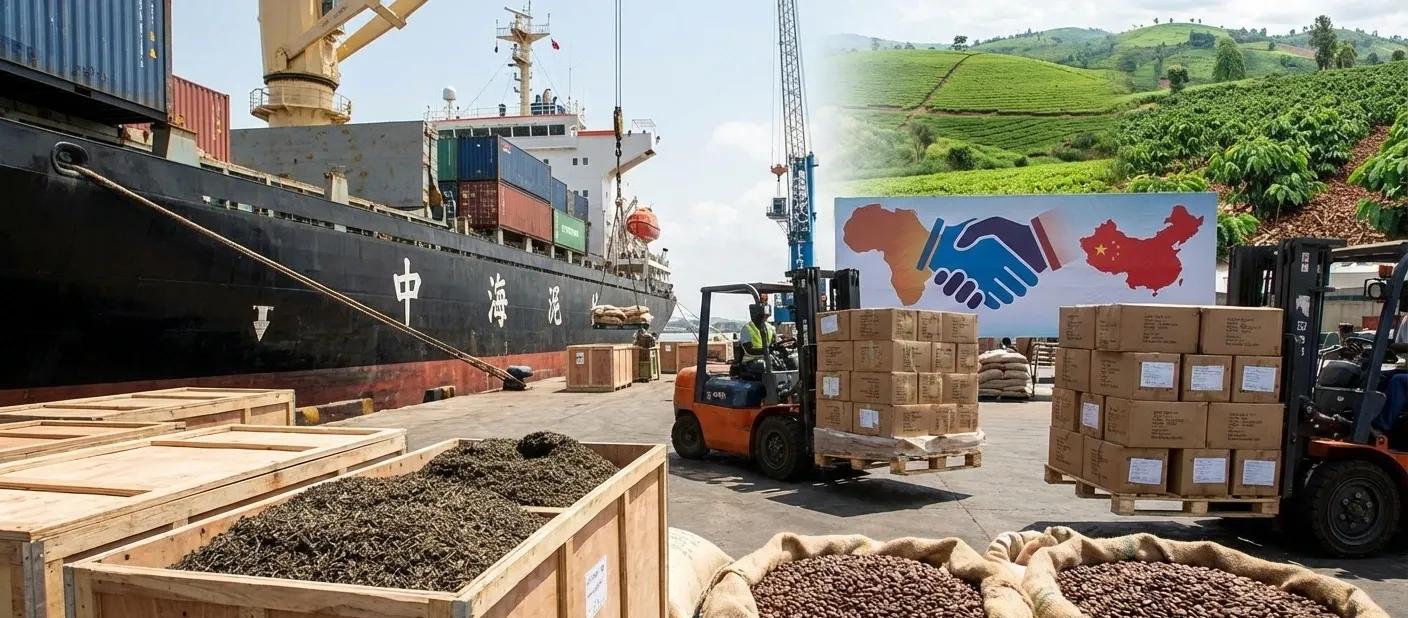
The near-duty-free access is expected to substantially lower the cost of Kenyan goods in China, boosting competitiveness and stimulating export growth. Agriculture — the backbone of Kenya’s economy — stands to benefit the most as products like tea, coffee, cut flowers, avocados and horticultural produce gain greater market access without tariff barriers.
By removing customs duties on a broad range of goods, the framework could:
- Increase export volumes to China
- Attract investment into export-oriented agribusiness and manufacturing
- Create employment across supply chains
- Enhance foreign exchange earnings for Kenya
Analysts say that greater market access for agricultural and value-added products could also encourage producers to expand production and improve quality to meet Chinese consumer demand.
Addressing the trade imbalance
The deal comes amid efforts to rebalance a heavily lopsided trade relationship. China has been one of Kenya’s top sources of imports, with Kenyan exports traditionally trailing far behind. In recent years, goods imported from China into Kenya have vastly exceeded what Nairobi ships back, driving concerns over persistent trade deficits and limited access to critical markets.
By securing tariff relief for Kenyan products, Nairobi aims to strengthen its export base and reduce reliance on a narrow set of markets. This diversification strategy is particularly relevant in the aftermath of the expiration and recent renewal negotiations around the African Growth and Opportunity Act (AGOA), which previously allowed Kenyan products duty-free entry into the United States.
Broader geopolitical and economic context
The Kenya-China tariff deal also reflects shifting global trade dynamics. As realignment of trade relationships accelerates worldwide, developing countries are increasingly seeking alternative markets to traditional Western partners. China’s willingness to extend near-total duty-free access signals an expanding economic footprint in Africa that coincides with rising Chinese investment in infrastructure, manufacturing, and consumer markets across the continent.
However, some observers caution that the framework’s preliminary nature means final terms and implementation details could change as negotiations continue, including rules of origin and product eligibility criteria that determine which goods genuinely benefit from the tariff break.
Next steps and outlook
Parliamentary approval is expected to be a key next step before the agreement is fully operational. If ratified, the arrangement could serve as a template for other middle-income African economies seeking similar trade access to Asia’s largest market.
For Kenya, the near-zero tariff access arrangement represents more than just a trade concession — it is a strategic bid to unlock export potential, bolster economic growth, and anchor its role in a more diversified global trade landscape
Tags:
Kenyatrade barriersWTOAfrican marketsexport diversificationbilateral tradeChinaagriculture