Greenland’s rising financial and strategic profile: U.S. interest and billionaire investments surge
Greenland is becoming a focal point for U.S. national security strategy and private capital investment, with billionaire-backed ventures targeting the island’s untapped mineral wealth amid rising great-power competition and Arctic economic prospects.
By Sarah Johnson • 1/17/2026
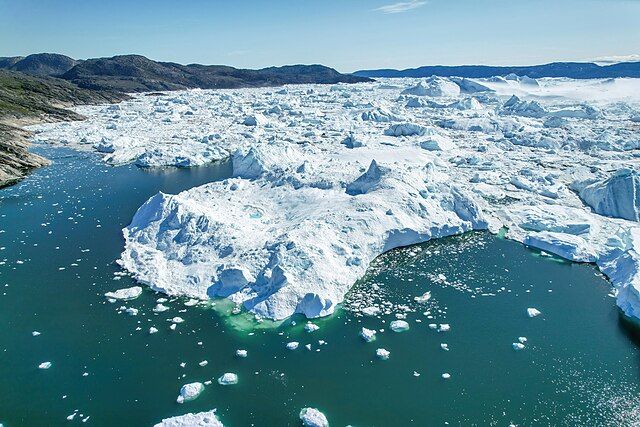
Greenland, the world’s largest island, largely covered by ice and governed autonomously under the Kingdom of Denmark, is rapidly emerging as a new frontier in global strategic investment, natural resource competition and geopolitical positioning. Once a remote outpost of the Arctic, it is now at the intersection of U.S. national security planning and major private capital flows from some of the world’s wealthiest investors.
Why Washington’s attention on Greenland has sharpened
The United States has intensified its focus on Greenland due to a combination of geopolitical, resource and economic factors that have gained prominence in the wake of shifting global power dynamics.
Strategically, Greenland occupies a pivotal location between North America and Europe, occupying much of the Arctic Circle and lying near critical maritime and air routes that are becoming increasingly accessible as Arctic ice recedes due to climate change. Control or influence over Greenland would give any power a significant advantage in projecting military and surveillance capabilities across the high north and monitoring Northern Hemisphere activity. These concerns are not new; during World War II, the U.S. and Denmark agreed on U.S. military access to Greenland to protect Allied shipping routes and establish early warning systems for air and missile defense. Today, this legacy of Arctic strategic importance persists, with current U.S. installations such as the alerting and radar facilities near Pituffik (Thule Air Base) serving as key nodes in aerospace warning and defense infrastructure.
Beyond military considerations, Greenland sits atop vast undeveloped mineral deposits, including rare earth elements, uranium, zinc and others critical to modern industry and defense. Analysts note that Greenland likely holds a significant portion of the world’s reserves of heavy rare earth elements, commodities essential for electric vehicle batteries, wind turbines, advanced electronics and missile guidance systems. With China historically dominating global rare earth mining and processing, U.S. policymakers and corporate strategists see Greenland’s mineral wealth as a potential leverage point to diversify supply chains and reduce reliance on Chinese sources.
These converging strategic and resource concerns have led to sustained high-level engagement between Washington, Copenhagen and Nuuk, including congressional delegations and diplomatic dialogue aimed at balancing Arctic security and economic cooperation. However, Denmark and Greenland’s government have emphatically rejected ceding sovereignty over the island, raising tensions in transatlantic relations.
Billionaires and the business case for Greenland
Remarkably, private sector investment interest in Greenland has surged alongside geopolitical focus. According to reports, some of the world’s richest individuals, including Jeff Bezos, Bill Gates, Michael Bloomberg, Sam Altman and Peter Thiel, have backed ventures aimed at tapping Greenland’s mineral potential.
One of the central investment vehicles drawing high-profile funding is Kobold Metals, a mineral exploration firm using artificial intelligence to map and identify rare earth and other critical mineral deposits across the island. Breakthrough Energy, a climate tech investment vehicle led by Bill Gates, played a major role in Kobold’s funding rounds, participating in subsequent series that collectively valued the company at nearly $3 billion.
Other tech and finance figures, such as Sam Altman and Peter Thiel, have invested in companies like Kobold or ventures like Praxis, which aspires to build technologically advanced developments on Greenland, including ideas for future-oriented urban infrastructure. These investments reflect an emerging view among leading capital allocators that Greenland, despite its harsh climate and logistical challenges, offers long-term strategic value in raw materials crucial to global supply chains.
Some private actors even played a role in shaping political interest in Greenland; Forbes reporting ties the suggestion of U.S. acquisition to billionaire Ronald Lauder, an heir to the Estée Lauder fortune and long-term political donor. His discussions with former Trump administration officials reportedly helped spark renewed federal interest in Greenland’s geopolitical and economic potential.
Balancing strategic stakes and economic realities
Despite the scale of political dialogue and private investment, extracting Greenland’s resource wealth remains challenging. Experts caution that mining in the Arctic’s extreme conditions would require significant capital, potentially billions of dollars, and long timelines before commercial returns materialize, even for projects with favorable mineral compositions.
Moreover, Greenland’s population of roughly 56,000 people, predominantly Inuit and Greenlandic nationals — has consistently emphasized sovereignty and self-determination. Greenlandic authorities have stressed the need for equitable, environmentally respectful partnerships, including diversification of the island’s economy beyond extraction and military considerations. Should U.S. or European companies wish to secure long-term roles in Greenland’s mineral sector, they will need to navigate not just geological and climatic obstacles, but complex political relationships managed between Nuuk, Copenhagen and foreign capitals.
What this means for Global Finance and Investment
The intersection of strategic geopolitical interest and private capital engagement in Greenland highlights several broader trends in global finance:
- Resource nationalism and supply chain diversification are becoming major drivers of investment strategy as countries and corporations seek alternatives to dominant suppliers in key sectors like rare earths.
- Frontier markets with low GDP but high resource potential can attract disproportionate attention from global capital when geopolitical incentives align with economic opportunity.
- Arctic and polar economies, long sidelined due to extreme conditions and limited infrastructure, are increasingly seen through the lens of long-term strategic value rather than short-term commercial returns.
- Geo-economic competition among the United States, China, Russia and European partners is reshaping where capital flows and how global supply network vulnerabilities are addressed.
As the Arctic enters a new era of strategic competition and economic interest, Greenland’s role, both as a territory with untapped natural wealth and a geopolitical linchpin at the top of the world, is likely to remain central to discussions among governments, multinationals and global investors alike.
Tags:
GreenlandKobold MetalsUnited StatesGeopoliticsDenmarkGlobal Finance