China, Namibia deepen investment ties through energy and critical minerals partnership
China and Namibia have strengthened their economic relationship by signing multiple cooperation agreements spanning energy, infrastructure, agriculture and critical minerals. The partnership aligns with Namibia's long-term strategy to diversify its economy while reinforcing China's access to strategic resources essential for the global energy transition.
By Sarah Johnson • 7/10/2026
China and Namibia have agreed to broaden their economic cooperation with a series of new agreements targeting energy, infrastructure, agriculture and strategic mineral development, underscoring the growing importance of Africa's resource-rich economies in the global supply chain.
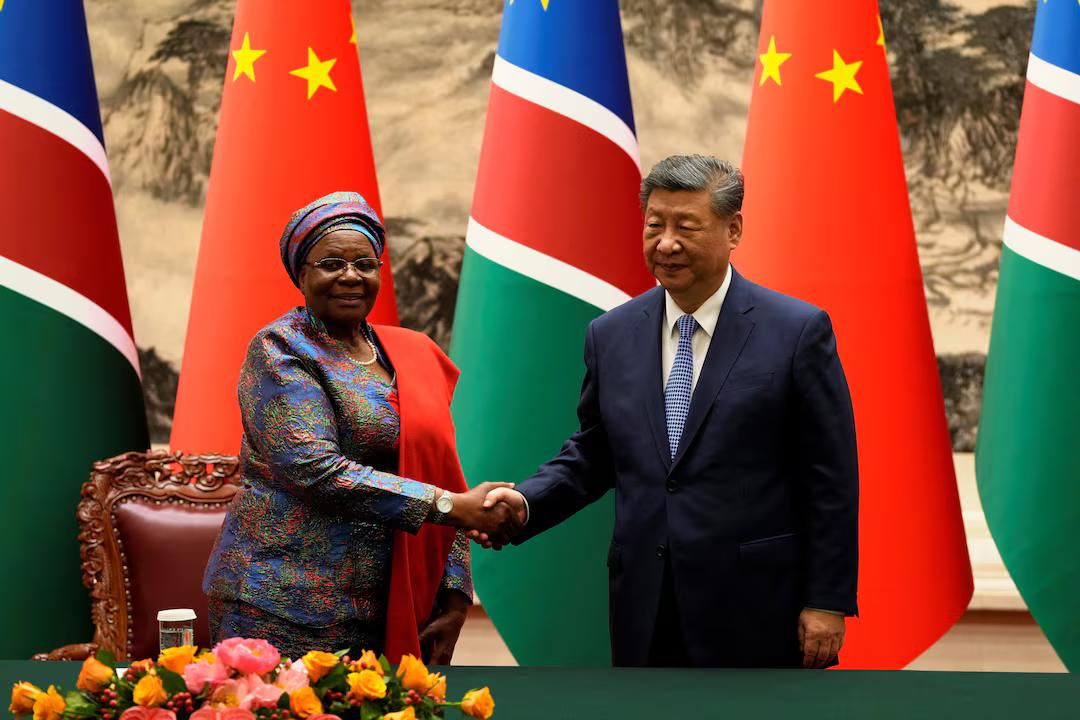
The commitments were announced following talks in Beijing between Chinese President Xi Jinping and Namibian President Netumbo Nandi-Ndaitwah during the latter's week-long state visit to China. The visit marks her first official trip outside Africa since assuming office in 2025, highlighting the significance Namibia places on its relationship with one of its largest trading partners.
Speaking during the meeting, Xi welcomed Namibia's continued commitment to bilateral cooperation, describing the relationship as strategically important for both countries. Nandi-NNdaitwah reaffirmed Namibia's dedication to strengthening ties with China, noting that her delegation included a large group of business leaders seeking new investment opportunities.
Eight agreements signed across key economic sectors
The two governments signed eight cooperation documents, including a framework for economic partnership and agreements covering green minerals, infrastructure development and other strategic sectors.
According to China's official readout of the meeting, both countries agreed to deepen collaboration in Infrastructure development, Energy projects, Mining and mineral processing, Agriculture, Education, Youth development, Science and technology.
A significant component of the discussions centred on critical minerals, where both governments committed to expanding cooperation in uranium, lithium and rare earth elements, resources that are increasingly vital for electric vehicles, renewable energy technologies and advanced manufacturing.
Unlike many traditional resource agreements, the joint statement also emphasised local value addition through domestic mineral processing, technology transfer and workforce development. These measures align with a broader trend across African economies seeking greater economic returns from natural resource extraction rather than relying solely on raw material exports.
Namibia pursues investment-led economic diversification
The agreements support Namibia's broader economic agenda of reducing unemployment and diversifying growth beyond its traditional industries.
Since taking office, President Nandi-Ndaitwah has prioritised job creation through investment in agriculture, renewable energy and industrial development. Her administration has also promoted what it describes as a "green revolution," focused on unlocking value from agriculture, water resources and emerging clean energy industries.
Foreign investment remains central to achieving these objectives, with China expected to play an increasingly prominent role given its longstanding commercial presence in Namibia.
Strategic minerals become central to bilateral trade
Critical minerals continue to dominate economic ties between the two countries.
According to the International Monetary Fund, China purchases approximately one-quarter of Namibia's exports. Uranium alone accounts for roughly 85% of Namibia's exports to the Chinese market, highlighting the country's growing importance in supplying materials used for nuclear energy generation.
Data from the American Enterprise Institute indicates Chinese companies have invested approximately $4.2 billion in Namibia, with nearly all of that capital directed toward the country's metals and mining industries.
As global demand accelerates for minerals supporting clean energy technologies, Namibia's reserves of uranium, lithium and rare earth elements position the country as an increasingly strategic supplier in international markets.
Energy sector adds new growth potential
Beyond mining, Namibia's emerging oil industry is attracting increasing international attention.
Major discoveries by Shell and TotalEnergies have uncovered an estimated 2.6 billion barrels of offshore crude oil, creating expectations that Namibia could become one of Africa's leading oil producers by the end of the decade if commercial development proceeds as planned.
The country is simultaneously pursuing opportunities in green hydrogen production, reflecting an effort to balance fossil fuel development with investments in renewable energy.
International financial institutions have identified agriculture, fisheries, oil and gas, and green hydrogen as sectors capable of supporting sustained economic growth, provided structural reforms continue alongside increased private investment.
Broader implications for Africa-China Economic Relations
The latest agreements illustrate China's continued focus on securing access to strategic resources while financing infrastructure and industrial development across Africa.
For Namibia, the partnership offers access to capital, technology and export markets that could support industrialisation and employment. For China, closer cooperation helps strengthen supply chains for minerals that are becoming increasingly important to global energy transition industries.
As competition for critical mineral resources intensifies worldwide, partnerships that combine investment with local processing and skills development may become a defining feature of future Africa-China economic cooperation.
Tags:
Xi JinpingNetumbo Nandi-NdaitwahNamibiaChina