
Nigeria–UAE Trade Deal Explained: What the CEPA Means for Exports, Investment and Economic Diversification
Nigeria has signed a landmark trade and investment agreement with the United Arab Emirates that promises duty-free access for thousands of Nigerian products, improved investor protections, and new opportunities for businesses and professionals. The Nigeria–UAE Comprehensive Economic Partnership Agreement (CEPA) signals a strategic shift toward export-led growth and deeper Middle East–Africa trade integration.
By Sarah Johnson • 1/22/2026
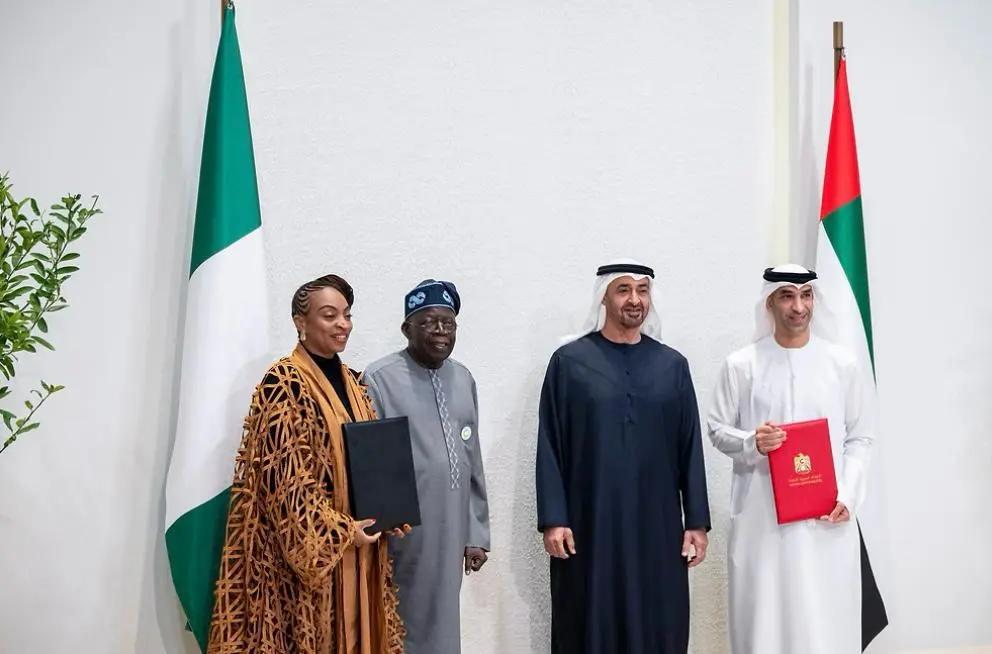
Nigeria has taken a significant step in reshaping its trade and investment landscape with the signing of a Comprehensive Economic Partnership Agreement (CEPA) with the United Arab Emirates. The agreement was signed in Abu Dhabi on January 13, 2026, and is positioned by the government as a cornerstone of its push toward economic diversification, export expansion, and improved foreign investment inflows.
Negotiated by the Federal Ministry of Industry, Trade and Investment under Minister Jumoke Oduwole, the deal aligns with President Bola Tinubu’s Renewed Hope Agenda, which aims to reduce Nigeria’s dependence on oil revenues by strengthening manufacturing, services, and value-added exports.
According to the ministry, the CEPA is designed to remove long-standing trade barriers, provide regulatory clarity for investors, and integrate Nigerian businesses more deeply into global supply chains anchored in the Middle East.
What the Agreement Covers
The Nigeria–UAE CEPA is a binding bilateral trade and investment framework that governs:
- Tariff elimination on goods
- Market access for services
- Investment protections
- Business mobility and residency rights
- Regulatory cooperation
Officials describe it as one of Nigeria’s most comprehensive trade deals outside Africa.
Key Gains for Nigeria
1. Duty-Free Access for over 7,000 Products
Under the agreement, the UAE will eliminate tariffs on more than 7,000 Nigerian export products, immediately improving price competitiveness in one of the world’s most important logistics and re-export hubs.
Products benefiting from immediate duty-free access include:
- Fish and seafood
- Oilseeds and cereals
- Cotton and agricultural inputs
- Pharmaceuticals
- Chemicals
Tariffs on manufactured goods such as machinery, vehicles, electrical equipment, apparel, and furniture will be phased out over three to five years, offering Nigerian manufacturers a predictable path to scale production for export. For exporters, the UAE serves not only as a final market but also as a gateway to Asia, Europe, and the wider Middle East.
2. Expanded Opportunities for Nigerian Businesses and Professionals
The CEPA allows Nigerian companies to:
- Establish branches, subsidiaries, or new entities in the UAE
- Send business visitors for stays of up to 90 days per year
- Relocate managers, executives, and specialists under renewable three-year intra-company transfer arrangements
This provision is expected to benefit professional services firms, logistics companies, fintechs, construction firms, and creative industries seeking regional expansion.
3. Stronger Investment Protections to attract UAE Capital
The agreement provides clearer legal and regulatory protections for UAE investors, addressing issues that have historically limited capital inflows into Nigeria.
Government officials say the deal will:
- Improve confidence in Nigeria’s investment framework
- Support industrial projects and logistics infrastructure
- Create jobs, particularly for young Nigerians
UAE institutions have already signalled interest, with First Abu Dhabi Bank reportedly exploring infrastructure financing opportunities, including Nigeria’s Lagos–Calabar Coastal Road project.
What Nigeria is conceding
1. Gradual Tariff Reductions
Nigeria will remove tariffs on approximately 6,000 imported products, with:
- About 60% eliminated immediately
- The remainder phased out over five years
These imports are largely industrial inputs, capital goods, and machinery, intended to strengthen domestic production rather than displace local manufacturing. Nigeria’s Import Prohibition List remains unchanged.
2. Partial Opening of the Services Sector
Nigeria has made commitments covering 99 specific services across 10 sectors, including:
- Business and professional services
- Communications and transport
- Financial services
- Construction and distribution
- Health, environment, tourism, and recreation
Officials emphasise that the openings are targeted and structured to support productivity and competitiveness rather than full liberalisation.
Why the deal matters strategically
Beyond immediate trade flows, the CEPA reflects Nigeria’s broader ambition to:
- Shift from raw commodity exports to value-added manufacturing
- Position itself as a gateway to Africa under the African Continental Free Trade Area (AfCFTA)
- Leverage UAE capital, logistics expertise, and market access to integrate into global value chains
With AfCFTA covering a market of 1.4 billion people, the agreement enhances Nigeria’s appeal as a base for investors targeting both African and Middle Eastern markets. The government says the deal is consistent with Nigeria’s commitments under the World Trade Organisation, ECOWAS, and AfCFTA rules.
Political Backing and Next Steps
President Tinubu described the agreement as a practical outcome of Nigeria’s economic reform drive, saying it delivers tangible benefits for exporters, manufacturers, and service providers while giving UAE investors clearer rules to back Nigeria’s productive sectors.
Implementation is set to begin immediately, with agencies such as the Nigeria Customs Service, Nigerian Export Promotion Council, Nigerian Investment Promotion Commission, and Standards Organisation of Nigeria tasked with supporting businesses to take advantage of the agreement.
Minister Oduwole urged Nigerian firms to move quickly, stressing that the CEPA was negotiated with the private sector in mind and opens doors not only to the UAE but to wider global markets.
The Nigeria–UAE CEPA represents a structural shift in Nigeria’s trade policy — away from protectionism and toward export competitiveness, investment attraction, and deeper global integration. Its success will ultimately depend on how effectively Nigerian businesses scale production, meet quality standards, and leverage the UAE’s position as a global trade hub.
If implemented well, the agreement could mark one of Nigeria’s most consequential trade partnerships in years.
Tags:
Nigeria–UAE trade dealCEPAFDIAfrica trade policy,